Article
Annotation is a powerful tool to improve understanding, interpretation and recollection. It can be particularly useful to train machine learning models, where the annotation of data is used to provide context and meaning and to enable algorithms that recognize patterns and perform complex tasks.
Voice recognition, enabled by machine learning, is designed to improve our daily lives and make technology more accessible, especially for people with disabilities. However, voice recognition technology can be inaccessible for many people with speech disabilities.
Fortunately, researchers like Ava Hampe, an undergraduate student in the Department of Speech and Hearing Science at the University of Illinois Urbana-Champaign, are working to improve voice recognition systems to increase accessibility and inclusivity.
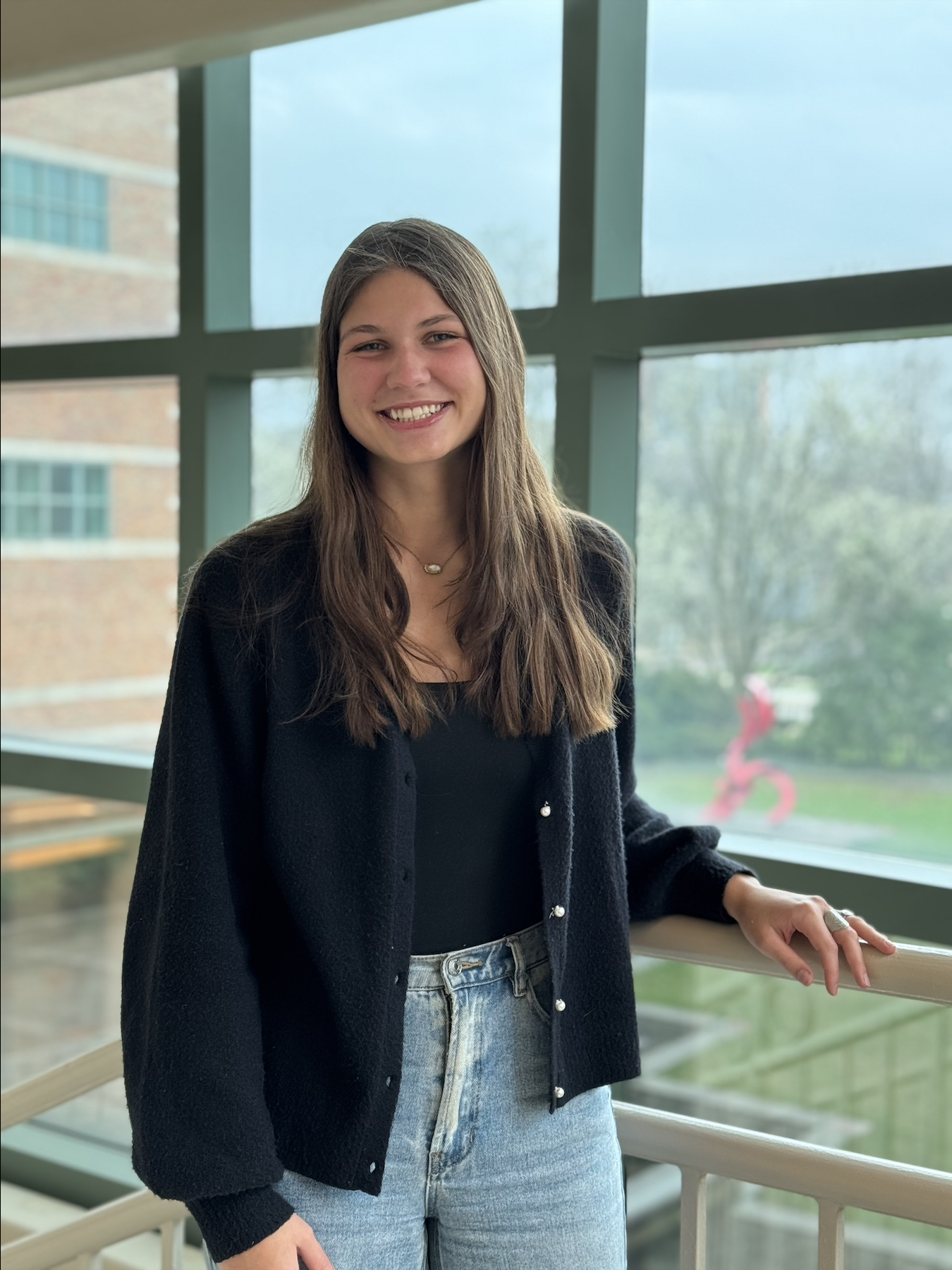
Hampe is a speech-to-text annotator for the Speech Accessibility Project, an interdisciplinary research initiative led by researchers at Illinois. The project aims to make voice recognition technology more accurate and accessible for people with diverse speech patterns or speech disabilities.
In this Q&A, Hampe discusses her experience as an annotator, provides insight to the impact of this project and recalls what she has learned along the way.
How did you first hear about the Speech Accessibility Project or how did you become interested in it?
I first heard of the Speech Accessibility Project through a classmate. She described the project, and I was instantly interested, asking her details about the project and information regarding how to get involved. This project was one that I knew would have a tremendously positive impact on those with speech and language disorders and that was something I was eager to contribute to.
What is your role in this project?
I currently work as a text annotator. In this role, I listen to contributors’ speech files and transcribe what they say with as much accuracy as possible. I also remove any overlapping voices.
What is the goal of the work you’re doing?
The goal of my specific role is to accurately transcribe what participants with various speech and language impairments communicate. These transcriptions are used to further the goal of the entire project, which is to make voice recognition technologies more useful for those with diverse speech patterns.
Why is this project valuable?
This project is extremely valuable because it increases accessibility to voice recognition technology. This can be especially helpful for those who may have motor impairments as well as speech or language impairments. For example, individuals can surf the internet, communicate with others, set important reminders and perform a variety of other tasks using only their voice. This project will also reduce frustration that may come with voice recognition technology incorrectly interpreting what an individual has said. Overall, this project will enhance the quality of life for those with diverse speech patterns and allow them to use technologies that they may not have had access to before.
What is something that someone might not know about the project?
Others may not know that the prompts of this project elicit very personal responses. Although I have never met the individuals whose speech I transcribe, their answers make me feel like I know them well. They describe their families, hobbies and other aspects of daily life in detail. This makes the transcription process very engaging, interesting and enjoyable.
What are some of the challenges you face in your role?
One challenge I face in this role is transcribing prompts when individuals describe the challenges they face. Many of the individuals have been through incredibly difficult times and it can definitely be emotional to learn about. However, these stories are incredibly inspiring and it is helpful to keep in mind that our work will ultimately make their lives better.
Are there any anecdotes or experiences with participants you’ve had that you’re willing to share?
The speech file that stood out to me the most was a participant’s response to the prompt “What is the greatest gift you have ever received?” This participant answered that regaining speech and being able to use her voice again was the most wonderful gift and one she is eternally grateful for. This made me very emotional, both thrilled for her that she regained communication and confident that my future work as a speech-language pathologist is valuable.
What is the most interesting thing you’ve transcribed?
There is not one specific transcription that stands out to me, but I always find learning about people’s daily lives fascinating. They describe their hobbies, where they live who their families are, and it is very enjoyable to get to learn about these individuals, as they all have very different backgrounds.
What is something you’ve learned that surprised you or that you found interesting?
One individual whose speech I transcribed had cerebral palsy and some visual impairment as well. When asked about his fears, he said he is afraid of not knowing what is going on around him because he cannot see very well. This gave me a lot of perspective regarding the things people experience in their daily life and what I take for granted.
Is there anything else you would like to share?
The Speech Accessibility Project is amazing! It has taught me so much and I am so grateful to be a small part of such impactful work. I know this project will touch many lives and am beyond excited to see how it continues to evolve in the future.
Editor’s note: This interview was lightly edited for print.
Beckman Institute for Advanced Science and Technology