Article
Creative questions and interdisciplinary collaboration are valuable tools for solving the world’s most pressing issues, and the 2025 Beckman Institute Graduate Fellows are ready to use both.
The Beckman Institute Graduate Fellows program, funded by the Arnold and Mabel Beckman Foundation, supports graduate students’ interdisciplinary research. This year’s class of fellows includes Sarah Asif, neuroscience; Siqi Han, evolution, ecology and behavior; Martín Irani, neuroscience; Yupeng Li, biophysics and quantitative biology; Rita Huan-Ting Peng, bioengineering; and Zirui Wang, materials science and engineering. Their projects’ aims include optimizing a novel type of battery, developing a treatment for breast cancer and improving brain imaging techniques.
Read on to learn more about them:
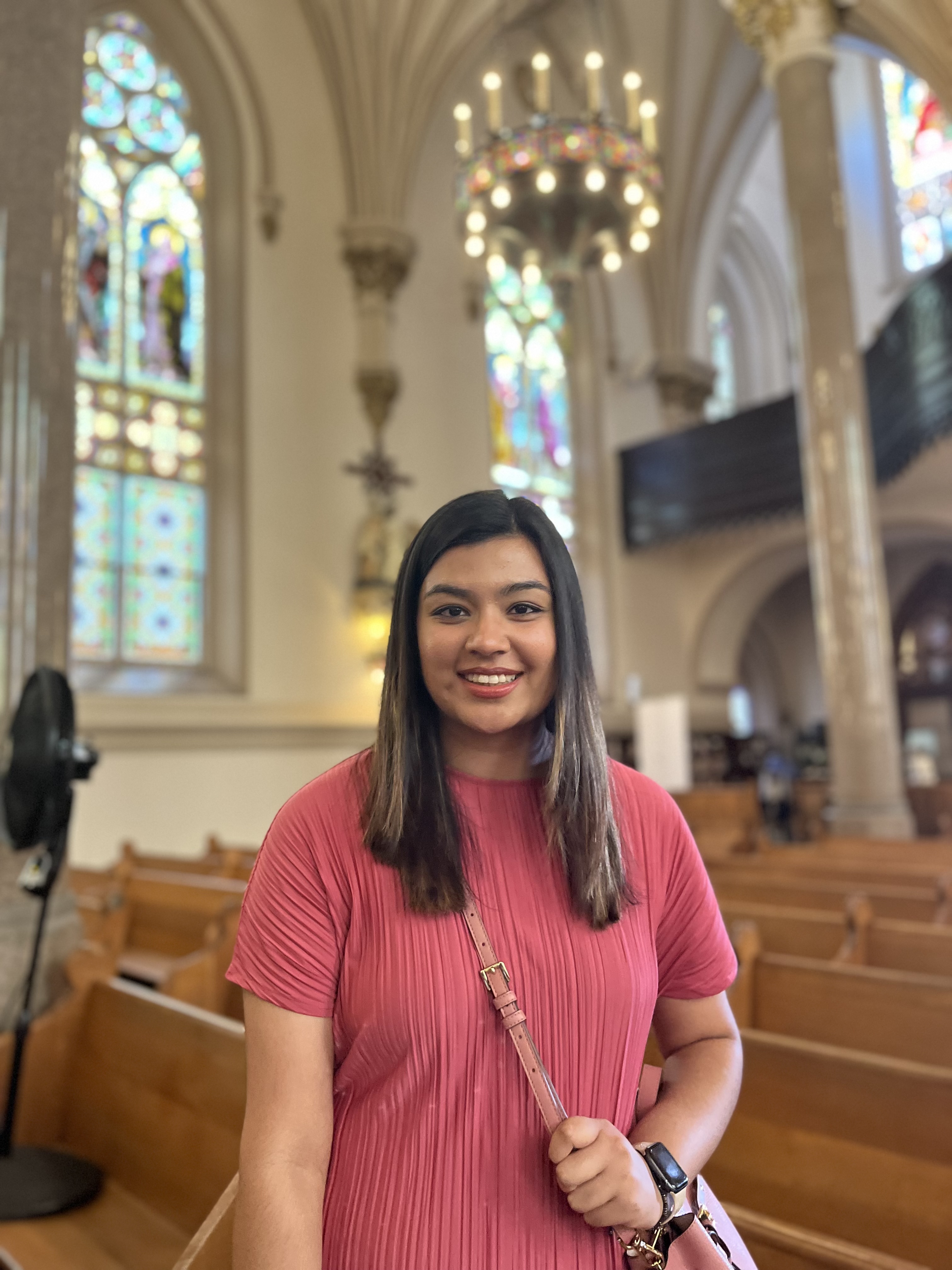
Sarah Asif
Sarah Asif is pursuing her Ph.D. in neuroscience. She earned her M.S. in neurobiology from Northwestern University and her B.S. in neuroscience from the University of Illinois Chicago.
The blood-brain interface is a selective barrier that protects the brain while allowing essential exchange with the bloodstream. Its permeability fluctuates with circadian rhythms, creating windows of both heightened protection and increased vulnerability. Inflammation can override these rhythms, increasing the risk of barrier breakdown and neurological disorders. Asif investigates how time-of-day and inflammation interact to regulate BBI function. She recreates the BBI using cell-based systems and also studies inflammation in rat models. Her work explores how biological timing shapes immune responses and barrier integrity, with the goal of guiding time-sensitive treatments for neurodegenerative diseases.
Asif is collaborating with adviser Martha Gillette, a professor of cell and developmental biology; Brad Sutton, a professor of bioengineering and technical director of Beckman’s Biomedical Imaging Center; and Liviu Mirica, a professor of chemistry.
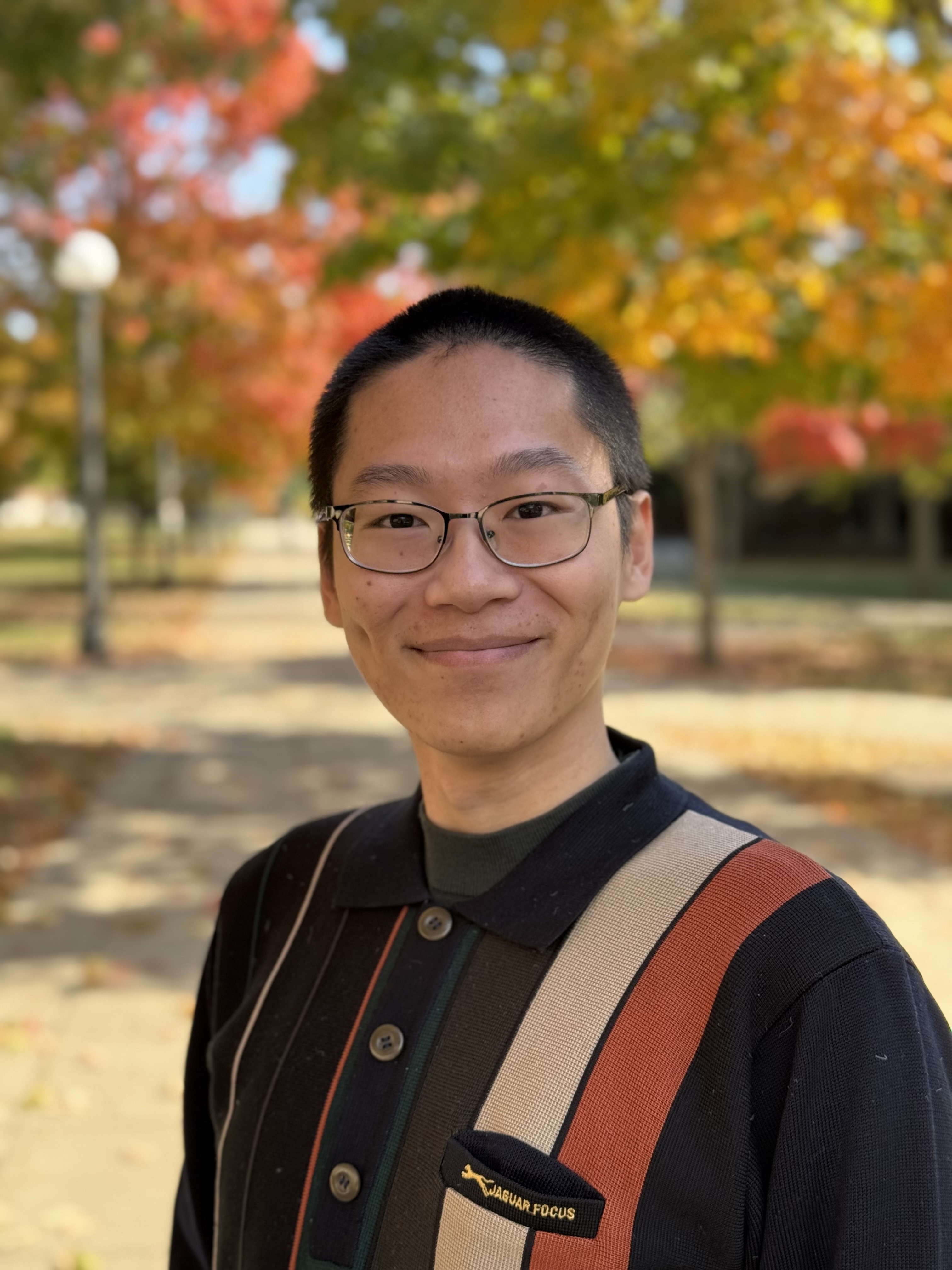
Siqi Han
Siqi Han is pursuing his Ph.D. in evolution, ecology and behavior.He is under the supervision of Ryan Dilger, aiming to investigate critical aspects of mammalian brain development. He earned his B.S. in psychology from the University of Western Ontario, his M.E. in engineering from Concordia University and his B.M. in engineering management from Wuhan University.
Myelin is a sheath surrounding part of neural connections, which helps signal transmission between neurons. Monitoring myelin is important for assessing brain health – for example, damage to myelin interrupts neural circuits, resulting in issues like multiple sclerosis. However, a way to specifically measure myelin using MRI has not been established, primarily because it is difficult to verify the accuracy of proposed methods.
Han has developed a way to stain and image myelin samples to gain detailed, 3D maps of their structure. For his project, he will create such maps of rodent brains and compare them with MRI datasets targeting different brain components. Together, these techniques will allow him to verify the accuracy of the MRI measurements and determine whether myelin density is a reliable marker of different sections of the brain.
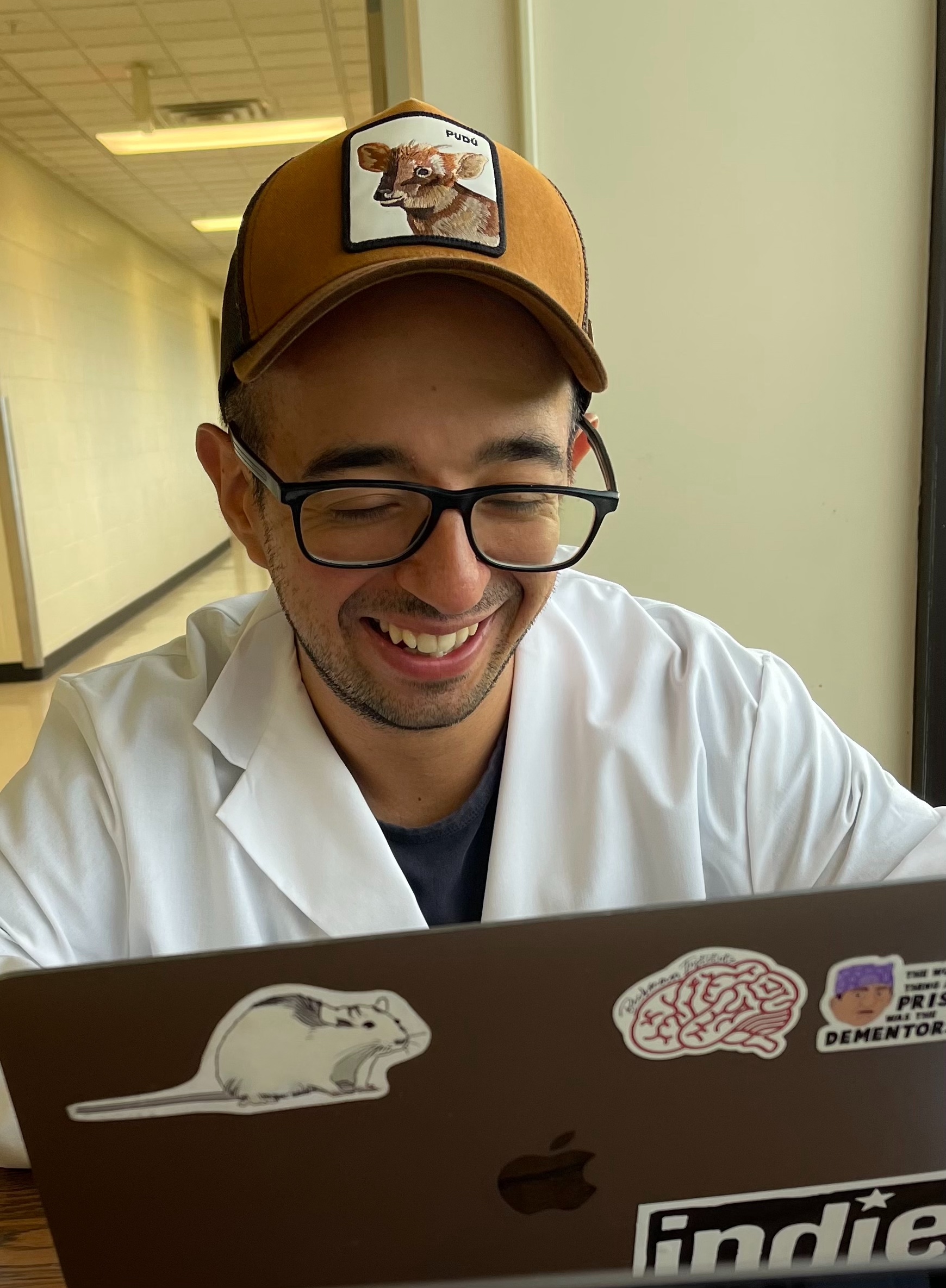
Martín Irani
Martín Irani is pursuing his Ph.D. in neuroscience. He earned his B.S. in biochemistry from the University of Chile.
Our brains must regularly filter out extraneous information and focus on important details. For example, while talking with a friend at a busy party, your auditory cortex is hard at work directing your attention at your friend’s words while tuning out the surrounding conversations. There is evidence that our brain takes the locations of different stimuli into account, but the way the auditory cortex represents this space is unclear.
Understanding how our brain regulates attention has implications for auditory processing disorders and speech recognition programs. To understand how neural activity changes in different conditions, Irani will measure brain activity in mice as the mice conduct tasks related to sound localization.
Irani will collaborate with his adviser Sepideh Sadaghiani, a professor of psychology; Howard Gritton, a professor of comparative biosciences; and Prashant Mehta, a professor of mechanical science and engineering.
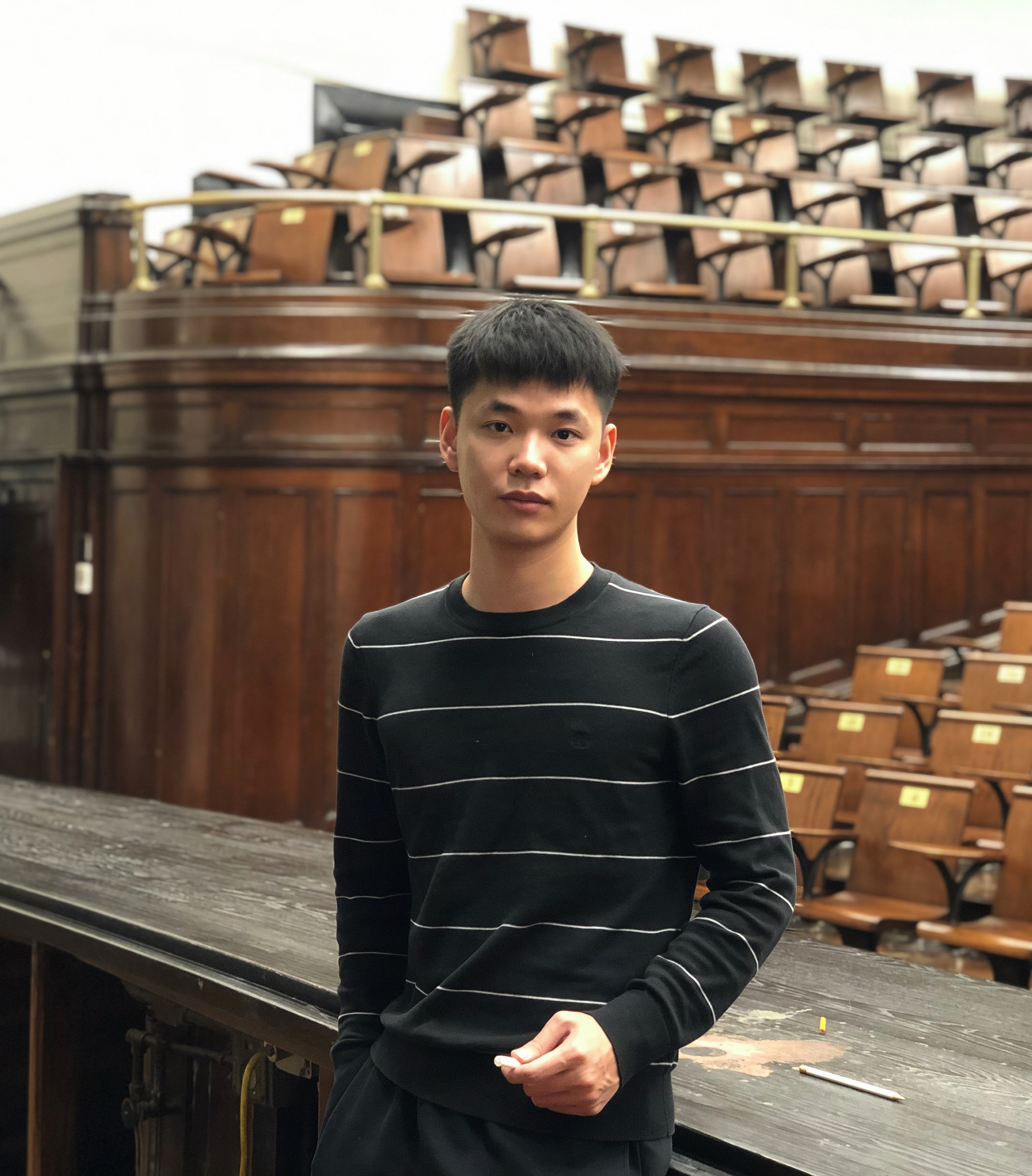
Yupeng Li
Yupeng Li is pursuing his Ph.D. at the Center for Biophysics and Quantitative Biology. He earned his B.S. in Tang Aoqing Honors Program in Chemistry from Jilin University. Breast cancer is the most prevalent type of cancer and the second-highest cause of cancer-related mortality in women. High cholesterol levels have been linked to breast cancer progression, as cholesterol promotes the activation of an enzyme called AKT1 which causes excessive cell growth and survival. As a key part of this activation process, cholesterol molecules bind to a specific site on the AKT1 enzyme. However, the exact location and the corresponding atomistic-scale interactions of this site are not well-explored. Li will use computational modeling and simulations to characterize this site, and will develop an inhibitor to prevent cholesterol molecules from binding.
Li is collaborating with adviser Emad Tajkhorshid, a professor of biochemistry; Erik Nelson, a professor of molecular and integrative physiology; and Wonhwa Cho, a professor of chemistry at the University of Illinois Chicago.
Rita Huan-Ting Peng
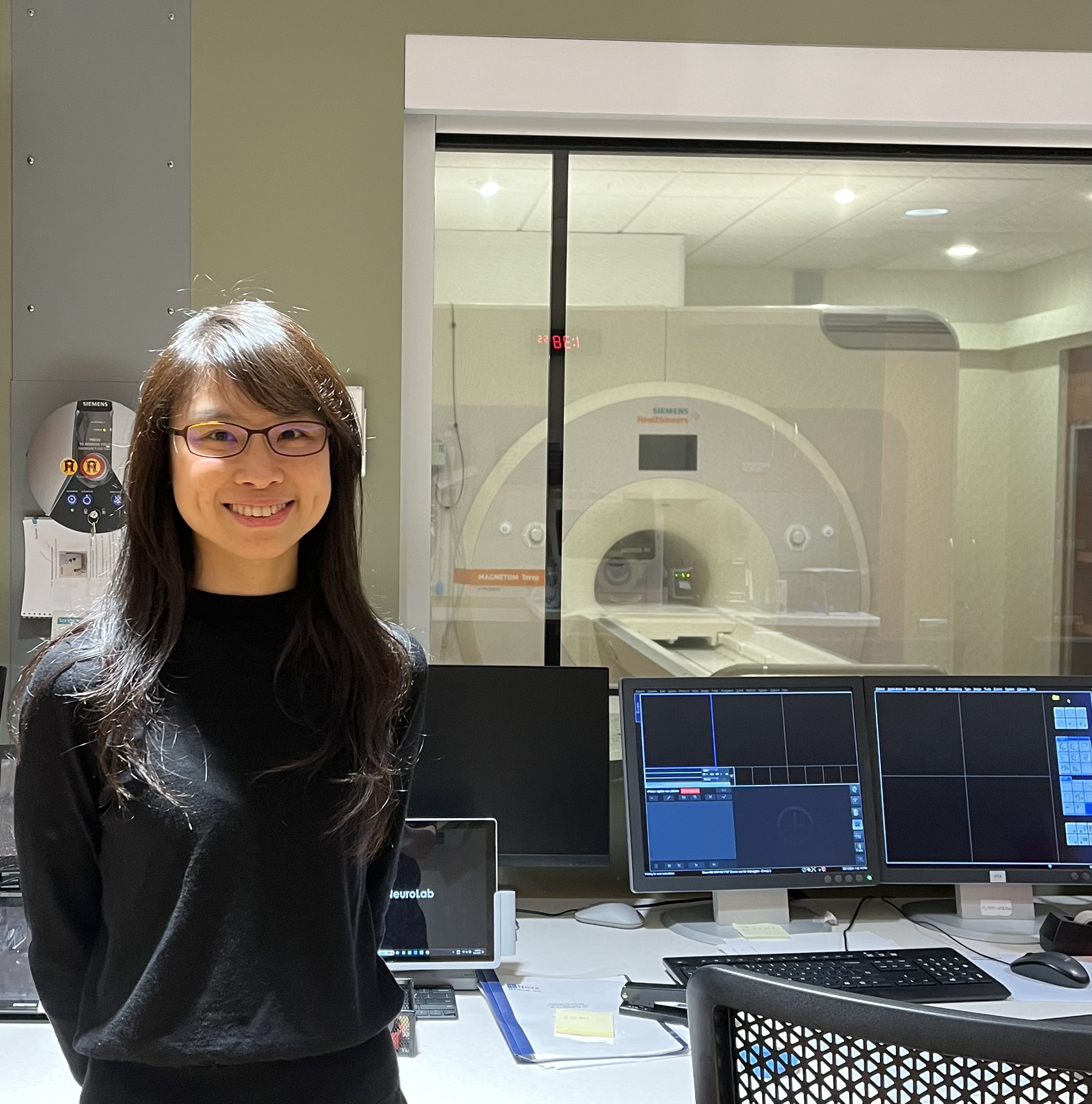
Rita Huan-Ting Peng is pursuing her Ph.D. in bioengineering. She earned her B.S. in medical imaging and radiological science from Chang Gung University, her M.S. in physics from National Taiwan Normal University and her M.S. in Biophotonics from National Yang Ming Chiao Tung University.
Strokes, which impact more than 700,000 people annually in the United States, often lead to motor impairments. These impairments are caused in part by alterations in how different brain regions communicate with each other, and understanding these network changes is essential for developing more effective, personalized treatments for stroke patients.
Peng will develop a dynamic model to estimate the balance between excitatory (signal-promoting) and inhibitory (signal-dampening) neurons in the brain. This model will allow her to map activity levels across the entire brain, rather than being limited to the smaller regions targeted by current technologies. She will use this model to identify abnormalities in brain activity among individuals who have experienced strokes, combining it with AI techniques to gain insights into stroke pathology and design potential personalized treatments.
Peng is collaborating with Yuan Yang, a professor of bioengineering; Matthew Singh, a professor of statistics; Brad Sutton, a professor of bioengineering and technical director of Beckman’s Biomedical Imaging Center; Zhi-Pei Liang, a professor of electrical and computer engineering; Yudu Li, a professor of bioengineering; Mark Anastasio, a professor of bioengineering; Hua Li, a professor of biomedical and translational sciences; and Volodymyr Kindratenko, assistant director of the Center for AI Innovation at the National Center for Supercomputing Applications.
Zirui Wang
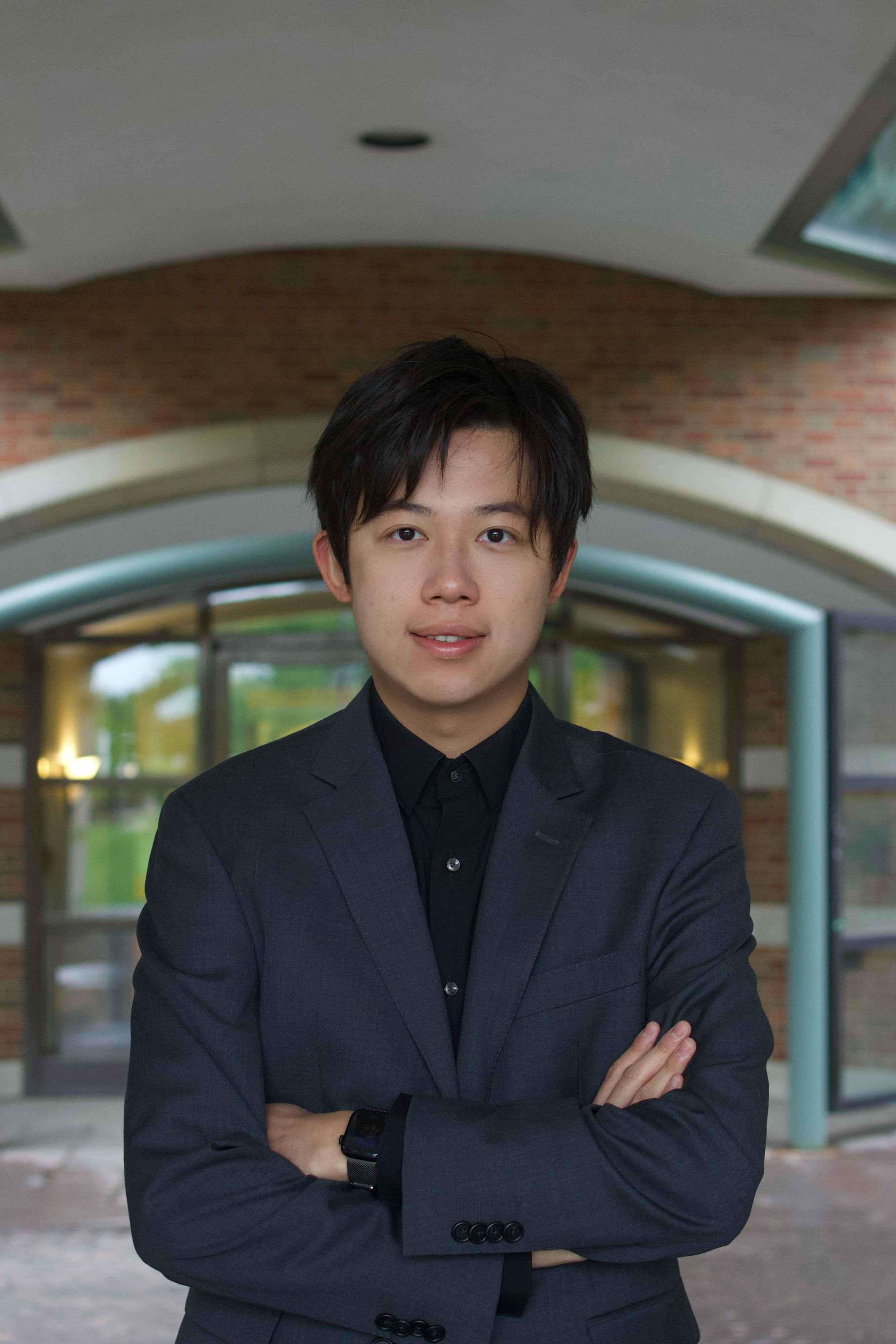
Zirui Wang is pursuing his Ph.D. in materials science and engineering. He earned his B.S. in materials science and engineering from the University of Illinois Urbana-Champaign.
Redox-targeting flow batteries are a promising technology for renewable power grids. In these systems, energy is stored in a solid material, and electricity is generated through a chemical reaction between the solid and a dissolved redox mediator. Optimizing this process is challenging due to the vast number of possible combinations of solid materials and redox mediators.
Wang will use an automated electrochemistry platform, elab, to perform high-throughput screening of redox mediator–solid material pairs. Guided by a machine learning–based optimization workflow, he will model and predict new combinations, enabling the synthesis of tailored battery materials and the development of a prototype with enhanced capacity and voltage efficiency.
Wang is collaborating with Joaquín Rodríguez-López, a professor of chemistry; Nick Jackson, an assistant professor of chemistry; Charles Schroeder, a professor of chemical and biomolecular engineering; and Qian Chen, a professor of materials science and engineering.
Beckman Institute for Advanced Science and Technology