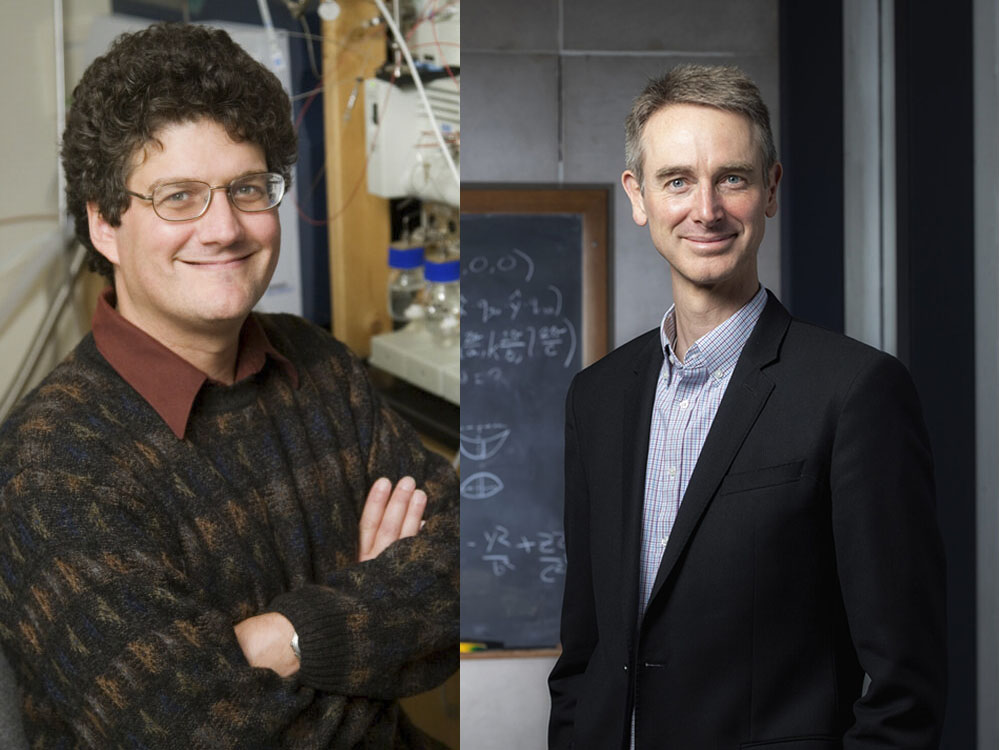
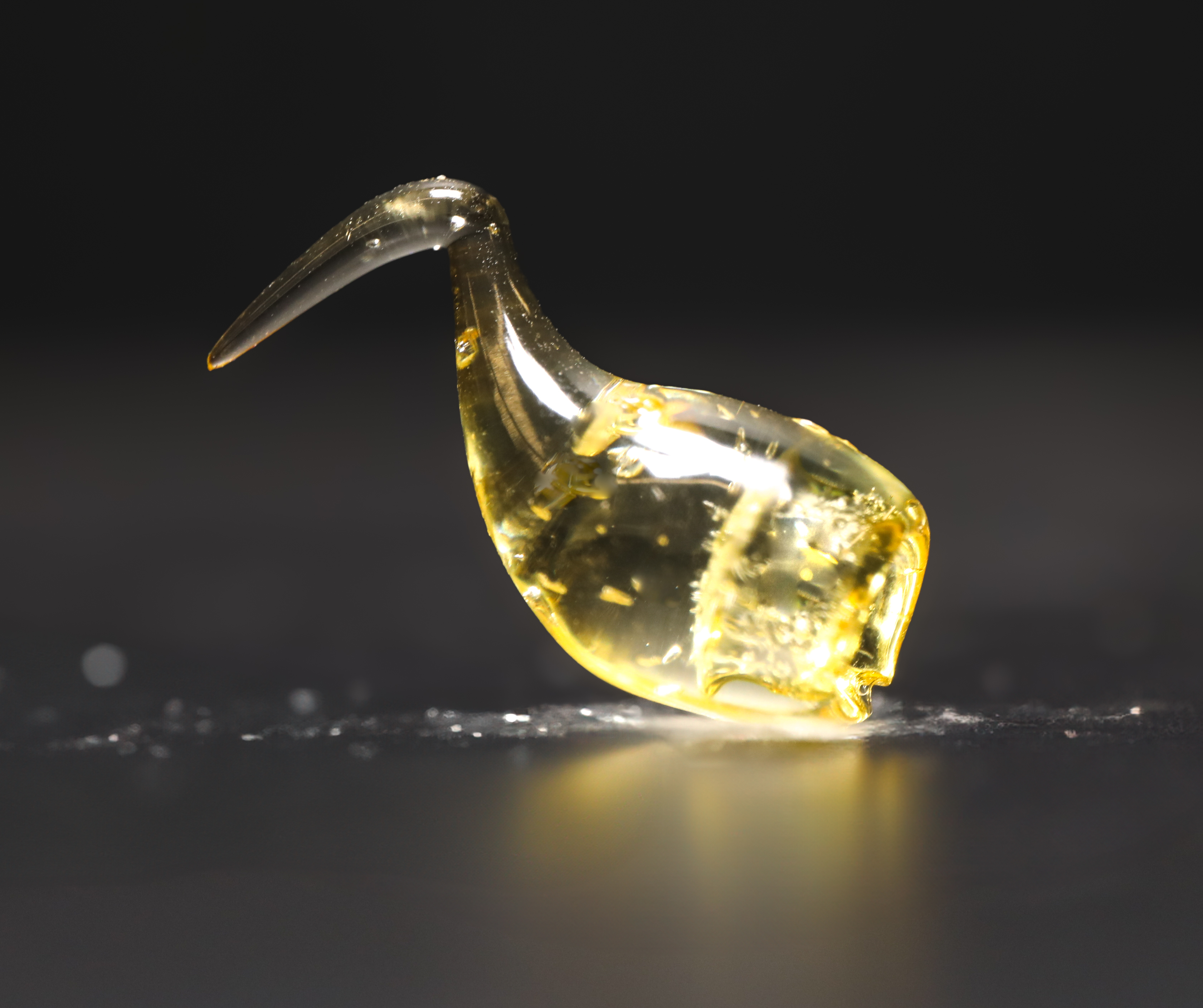
For the first time, a research team from Harvard University and the University of Illinois at Urbana-Champaign demonstrated the ability to 3D-print a battery. Jennifer Lewis, the Hansjörg Wyss Professor of Biologically Inspired Engineering at the Harvard School of Engineering and Applied Sciences (SEAS), co-led the project in her prior position at Illinois, in collaboration with Shen Dillon, a Beckman affiliate.
Beckman Institute professor Emad Tajkhorshid and student Giray Enkavi were co-authors of a paper examining aquaporin-water interactions.
The CheckLight, a washable beanie created jointly by MC10, a startup company founded by Beckman Institute professor John Rogers, and Reebok, can register a blow to a player’s skull and immediately signal the news by blinking brightly.
Beckman faculty member John Rogers doesn’t look like a cyborg yet, but his transformation has begun. His research team has been able to track arm motion, allowing researchers to control a toy helicopter’s flight path with a wave of the arm. Through a startup company that he founded called MC10, Rogers has teamed up with NBA and NFL stars such as Grant Hill and Matt Hasselbeck to use the technology to monitor head impacts during sports. Working with the stars “is pretty cool,” Rogers says. “It gives you a lot of credibility with your 10-year-old son.”
The interdisciplinary research in cognitive development that Chris Corea performed while an Illinois student working at the Beckman Institute prepared him for his current position as the baseball development manager for the St. Louis Cardinals. “I would say that was one of the things I took away from my experience at Illinois was to appreciate looking at the world through interdisciplinary lenses, that was sort of what the Beckman Institute was all about. That’s been pretty influential in my life and even my work here. Our research group has a lot of different people from a lot of different backgrounds so we can approach every problem from a lot of different ways.”
Valarmathi Thiruvanamalai, a new faculty member in the Department of Comparative Biosciences in the College of Veterinary Medicine at the University of Illinois, has joined the Beckman Institute. He has joined the Bioimaging Science and Technology Group within the Integrative Imaging research theme.
Beckman affiliate professor Rhanor Gillette and his team found that the predatory sea slug, Pleurobranchaea californica exhibits a learned avoidance behavior when confronted with another type of sea slug, , Flabellina iodinea.
Daniel Dethmers, an orthopedic surgeon at Presence Covenant Medical Center, has joined the Beckman Institute as a member of the member of the Human Perception and Performance (HPP) Research Group within the Human Computer Intelligent Interaction (HCII) Research Theme.
Former Beckman graduate student student Neha Gothe and her colleagues found that 20 minutes of yoga significantly improved participants' reaction time and accuracy in tests of cognitive function. Gothe is now a professor of kinesiology at Wayne State University in Detroit.

The memorial award for undergraduate research allows for a promising undergraduate neuroscientist to pursue research at the Beckman Institute during the summer. Ashley Holloway is the 2013 recipient.
Beckman faculty member Klaus Schulten and postdoctoral researcher Juan Perilla report that they have determined the precise chemical structure of the HIV capsid, a protein shell that protects the virus’s genetic material and is a key to its virulence. The capsid has become an attractive target for the development of new antiretroviral drugs.
A new tension gauge tether (TGT) laboratory method developed by Beckman affiliate Taekjip Ha and colleagues has broad applications for research into stem cells, cancer, infectious disease and immunology.
According to Daniel Simons and colleague Christopher Chabris in a New York Times Opinion piece, "Google Glass may allow users to do amazing things, but it does not abolish the limits on the human ability to pay attention."

University of Illinois at Urbana-Champaign researchers, led by Beckman affiliate Brian Cunningham, have developed a cradle and app for the iPhone that uses the phone’s built-in camera and processing power as a biosensor to detect toxins, proteins, bacteria, viruses and other molecules. This could enable researchers and physicians in the field to run on-the-spot tests for environmental toxins, medical diagnostics, food safety and more with their smartphones.
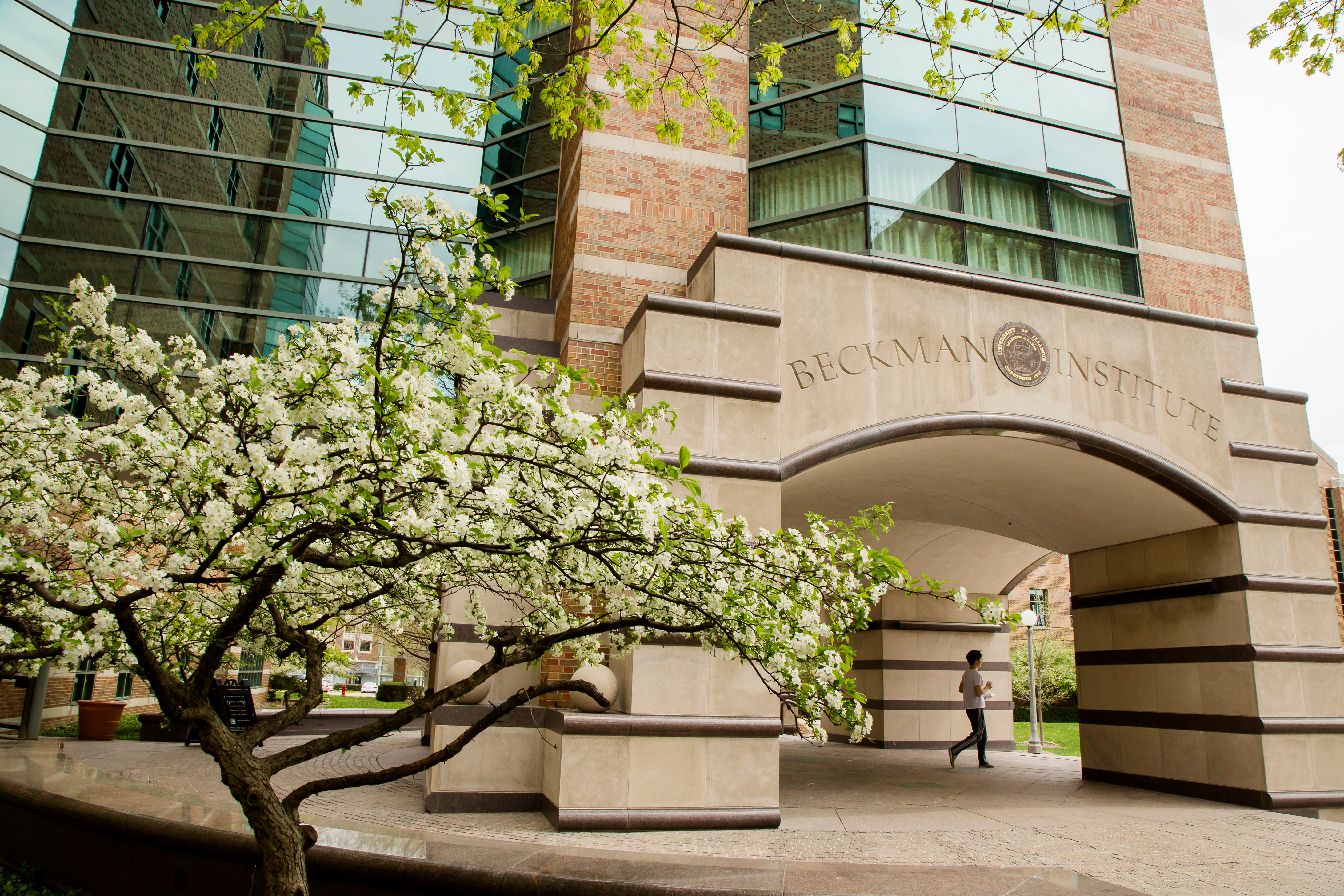
The Beckman Institute for Advanced Science and Technology is pleased to announce the 2013 selections for the Graduate Fellows program. Eight outstanding graduate students from the University of Illinois were selected and will begin their fellowships during the Fall 2013 semester.