Kyle Mathewson

Description

Address

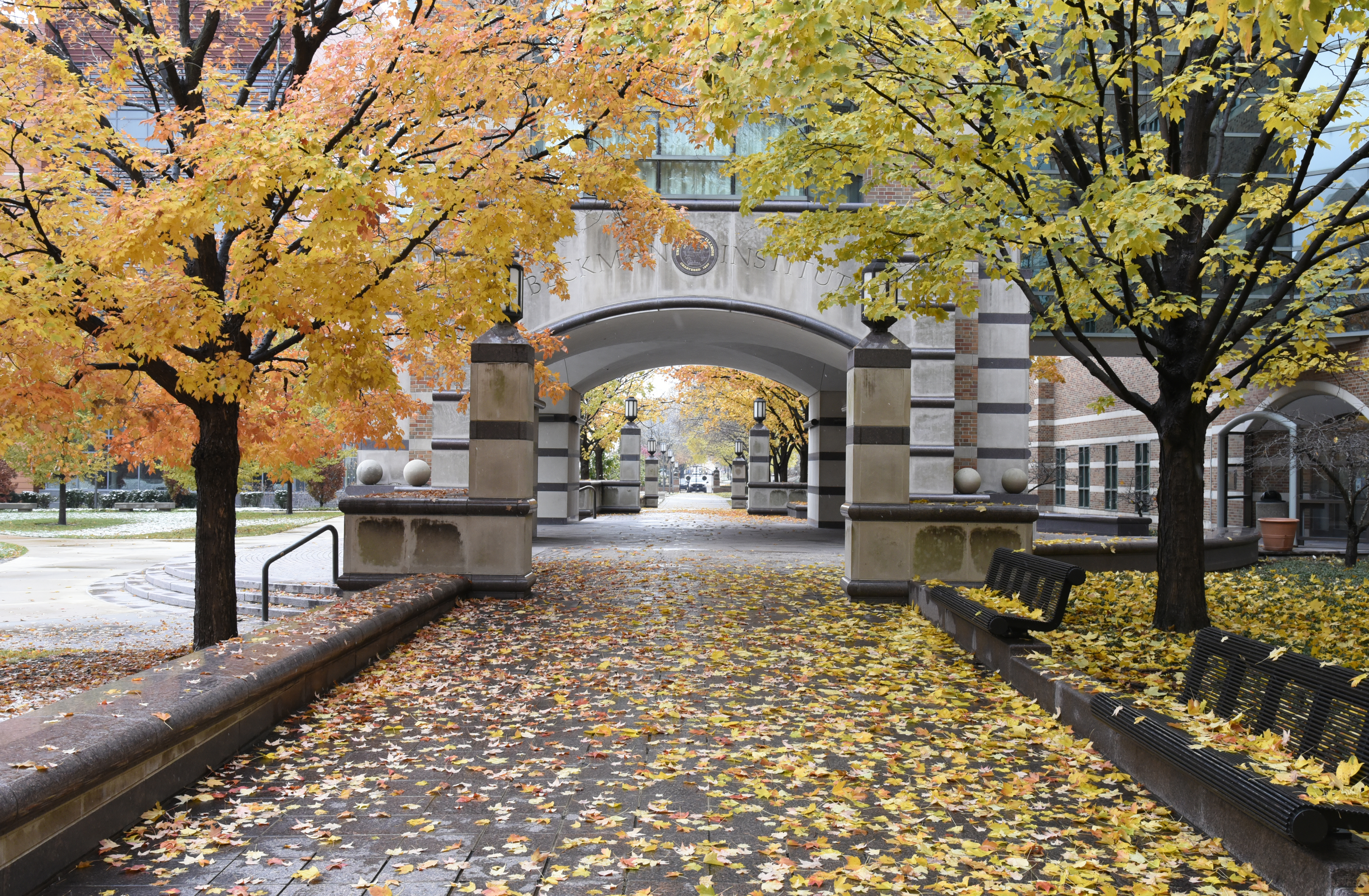
  • 5247 Beckman Institute
  • 405 North Mathews Avenue
  • Urbana, Illinois 61801

Biography

Kyle E. Mathewson received his B.A. (Top Honours) in Canada from the University of Victoria in 2007. He completed his honours thesis there under the supervision of Dr. Clay Holroyd. His field of research is the cognitive neuroscience of visual awareness and attention. He is affiliated with both the Cognitive Neuroscience and Human Perception and Performance groups at the Beckman Institute, as well as the Brain and Cognition Division of the Department of Psychology.

Honors

National Science and Engineering Research Council of Canada Postgraduate Scholarship (2007-2011). Cognitive Science/Artificial Intelligence Award, Beckman Institute, University of Illinois (2008). Canadian Governor General’s Silver Medal, University of Victoria, Canada (2007)

Research

I am interested broadly in the mechanisms of visual awareness and their intimate link with attention. In order to investigate the neural dynamics both associated with and predictive of conscious awareness, I utilize a combination of behavioural and neuroimaging techniques. More specifically, I am investigating the functional role of ongoing neural oscillations in visual perception and awareness using EEG, as well as event-related optical brain imaging. 

Publications

  • 2012
    • Mathewson, K.E., Prudhomme, C., Fabiani, M., Beck, D.M., Lleras, A., & Gratton, G. (2012). Making waves in the stream of consciousness: Entraining oscillations in visual awareness and ongoing EEG alpha with rhythmic visual stimulation. Journal of Cognitive Neuroscience, 24(12), 2321-2333.

    • Mathewson, K.E., Basak, C., Maclin, E.L., Low, K.A., Boot, W.R., Kramer, A.F., Fabiani, M., & Gratton, G. (2012). Different slopes for different folks: Alpha and Beta EEG power predict subsequent video game learning rate and secondary task improvement. Psychophysiology, 49, 1558-1570.

    • Zhu, L., Mathewson, K.E., & Hsu, M. (2012). Dissociable Neural Representations of Reinforcement and Belief Prediction Errors Underlie Strategic Learning. Proceedings of the National Academy of Sciences of the United States of America, 109(5), 1419-1424.

  • 2011
    • Maclin, E., Mathewson, K.E.,  Low, K.A., Boot, W.R., Kramer, A.F., Fabiani, M., & Gratton, G. (2011). Learning to Multitask: Electrophysiological indices of attention during video game training. Psychophysiology, 48(9), 1173-1183

    • Jensen, M., & Mathewson, K.E. (2011). Simultaneous perception of both interpretations of ambiguous figures, Perception, 40(8), 1009-1011.

    • Mathewson, K.E., Lleras, A., Beck, D.M., Fabiani, M., Ro, T., & Gratton, G. (2011). Pulsed out of awareness: EEG Alpha oscillations represent a pulsed inhibition of ongoing cortical processing, Frontiers in Perception Science, 2(99).

  • 2010
    • Mathewson, K.E., Fabiani, M., Gratton, G., Beck, D. M., & Lleras, A. (2010) Making waves in the stream of consciousness: Eliciting predictable oscillations in visual awareness with pretarget entrainment at 12 Hz.  Appearing in: Brooks, J., Belopolsky, A., Matsukura, M. & Palomares, M. (2010). Object Perception, Attention, and Memory (OPAM) 2009 Conference Report 17th Annual Meeting, Boston, MA, USA. Visual Cognition, 18(1), 137-141.

    • Mathewson, K.E., Fabiani, M., Gratton, G., Beck, D.M., & Lleras, A. (2010). Rescuing stimuli from invisibility: Inducing a momentary release from visual masking with pre-target entrainment. Cognition, doi:10.1016/j.cognition.2009.11.010

  • 2009
    • Mathewson, K.E., Gratton, G., Fabiani, M., Beck, D., & Ro, T. (2009). To See or Not to See: Pre-stimulus Alpha Phase Predicts Visual Awareness. Journal of Neuroscience, 29(9):2725-2732.

Press

The Communications Office maintains the information included in Beckman Institute's online directory listings. In order to update your directory listing, please submit the following information to directory-updates@beckman.illinois.edu:

  • a short bio including information on your educational background and your field
  • any honors and awards you may have received
  • a description of your research (approximately 200-400 words)
  • a list of recent representative publications
  • a photo of yourself (you can submit one or we can take one for you)